

Smart irrigation timer hose faucet setups are rapidly changing how homeowners and gardeners water their yards with far more precision, lower water bills, and less manual hassle. If you want to avoid overwatering, set and forget watering routines, or make your garden smarter without digging up your lawn, this guide explains exactly how to upgrade and where things can commonly go wrong.
Key Takeaways
- Smart irrigation timer hose faucets can cut water use by up to 50% and are ideal for small yards, raised beds, or renters wanting smart control without trenching.
- The US smart irrigation market is growing at over 15% CAGR and North American homes are rapidly adopting WiFi-enabled options for hose faucets.
- Common pitfalls include WiFi dropouts, setup friction, and battery surprises—avoid these with the pro tips and tricks below.
- What Is a Smart Irrigation Timer Hose Faucet and Who Should Consider One?
- How to Install and Set Up a Smart Hose Timer: Step-by-Step
- Realistic Problems, Analysis, and What to Compare
- Conclusion
- FAQ
What Is a Smart Irrigation Timer Hose Faucet and Who Should Consider One?
A smart irrigation timer hose faucet is a compact, app-controlled device that connects directly to a standard outdoor hose spigot and automates watering based on a set schedule or connected weather data. Unlike a full underground sprinkler system, you can install these devices in minutes, with no digging or expert tools. They are popular for smaller gardens, drip irrigation, patios, side yards, raised beds, and properties in drought-prone areas.
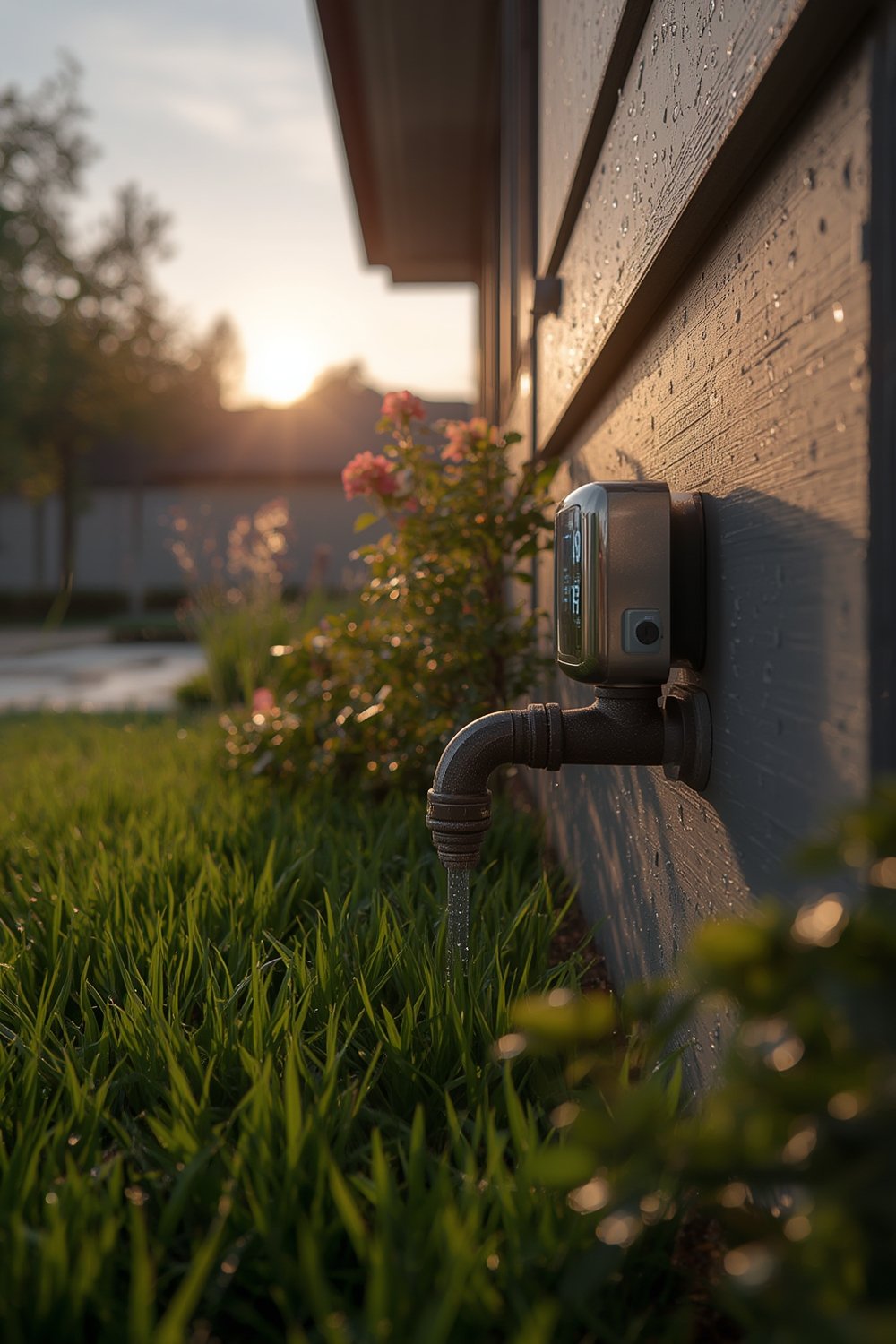
Not only are hose faucet timers much more affordable and flexible than full sprinkler systems, but as of 2024, the integration with smart home apps and weather-based watering is driving rapid adoption. According to recent reports, the North America smart irrigation market is projected to nearly triple by 2033, reaching about $2 billion, fueled by water shortages and tech-savvy homeowners [source]. Globally, smart tap timers are projected to hit $3.8 billion by 2032 [source].
If you have patchy grass, container plants, a raised bed, or a garden that would benefit from precise, set-and-forget watering, a smart irrigation timer hose faucet is probably the most efficient upgrade you can make—especially if you also use solutions like vertical garden systems or artificial grass turf that reduce long-term maintenance.
How to Install and Set Up a Smart Hose Timer: Step-by-Step
- Choose Your Device
Select a smart irrigation timer hose faucet compatible with your phone (iOS/Android) and WiFi band (usually 2.4GHz). Weather-proofing (minimum IPX4), number of zones, and battery type matter—AA/AAA batteries are common, but lithium lasts longer. - Check Water Pressure and Connection
Make sure your outdoor spigot delivers around 30-120 PSI for reliable operation. If you use hose splitters, check manufacturer notes for flow limitations. - Install the Timer on the Faucet
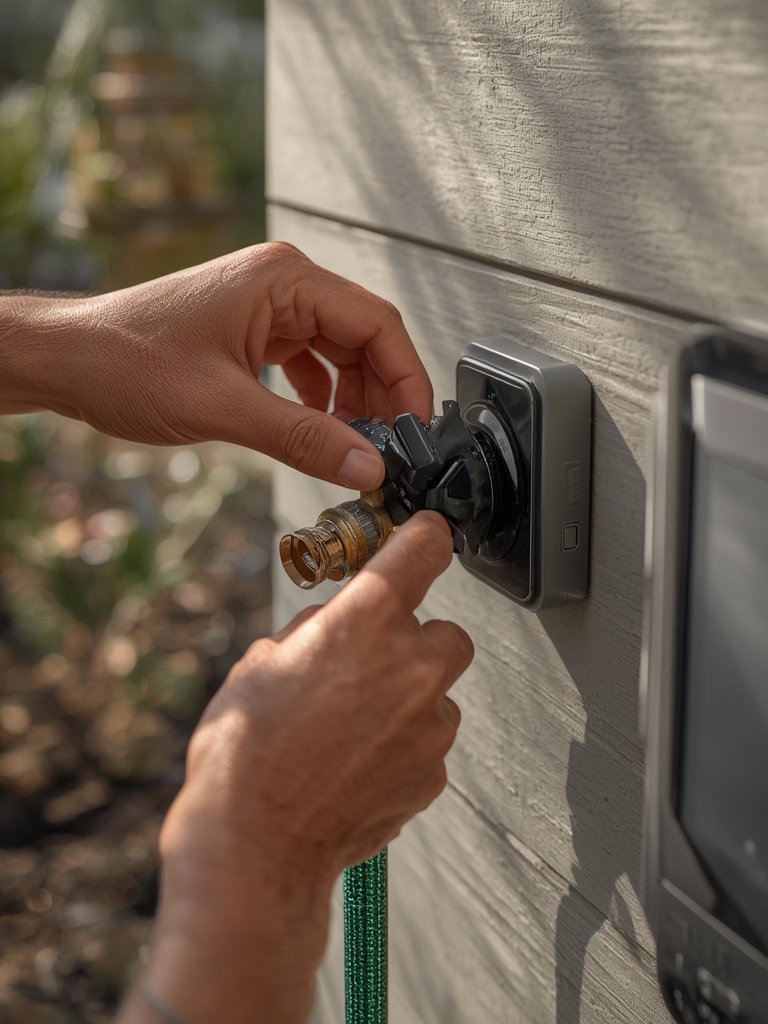
Screw the timer snugly onto the hose faucet/spigot. Always use the included rubber gasket to prevent leaks. Attach your hose or drip irrigation after the timer. - Insert Batteries or Charge
Install the required batteries or fully charge the device. Don’t assume factory batteries are full—they may be depleted from warehouse storage. - Pair with App and WiFi
Download the official app. Stand close to both the faucet and your router for best pairing. Follow prompts to scan QR code or enter serial. Allow necessary app permissions for push notifications.
- Program or Use Weather-Based Scheduling
Manually enter a watering schedule, or—if your model supports it—activate weather-based smart scheduling to automatically skip or shorten sessions when rain is detected. Most brands offer at least basic eco-mode or rain delay. - Test and Calibrate
Run a manual cycle to confirm the timer opens/closes fully and checks for drips at all seals. Adjust times if runoff occurs. Regularly inspect and app-check for skipped days or alerts. - Maintenance and App Updates
Set reminders to check battery life every 2-3 months during growing season, or when the app pings for low power. App updates can fix issues—keep up to date but avoid beta versions.
This setup works exceptionally well for container gardens, patios, or when paired with solutions like a drip irrigation kit for raised beds. Homeowners frequently find these timers become a “gateway” to broader smart outdoor automation—like full smart sprinkler controllers or even a robot lawn mower down the line.
Realistic Problems, Analysis, and What to Compare
While smart irrigation timer hose faucets appear simple, several real-world issues can catch new users off guard. Here’s what the 2024 research reveals—plus comparison points and possible snags you’ll want to consider before you buy or install.
Biggest Weak Points & Common Pitfalls
- WiFi Range and Dropouts: Many timer failures trace back to weak signals at outdoor faucets, especially on brick walls or at the far corner of a property.
- Battery Life Surprises: High-frequency watering or poor-quality batteries can cut advertised lifespan in half, often requiring more checks than manufacturers claim.
- App Glitches and Setup Frustration: Initial WiFi or Bluetooth pairing can fail repeatedly if the device is too far from the router, or if local interference is high.
- Leaky Gaskets and Cross-Threading: All-plastic threads are easy to over-tighten, causing leaks or making the unit hard to remove for winterization.
- No Universal Watering Solution: Timers are best for small to medium landscapes or specialty areas. Large lawns still benefit from in-ground, multi-zone systems [source].
According to industry data, about 40% to 50% water savings are possible with precise, weather-adjusted timing on small yards or gardens (compared to manual hosing), but only with proper calibration and regular maintenance [source].
Comparison Table: Smart Hose Timer vs Mechanical Timer vs In-Ground Sprinkler
| Feature | Smart Hose Timer | Mechanical Timer | In-Ground System |
|---|---|---|---|
| Installation | 5-15 min, no digging | 2-5 min, no app | Professional/DIY, trenching |
| Scheduling | App, weather-adapt, Alexa/Google | Manual dial | App or panel; rain sensor |
| Water Savings | Up to 50% | Low | 40-60% (w/sensor) |
| Upfront Cost | $40-$120 | $10-$30 | $800-$2,500 |
| Ongoing Cost | Batteries, possible app subscription | None | Repairs, controller update, winterization |
| Ideal Use | Small yards, renters, beds, container gardens | Manual convenience | Large lawns, landscaping |
Privacy & Security: Current Gaps
No major brand currently discloses strong privacy or security certifications for smart irrigation timer hose faucets. User accounts are typically secured by app password, but little is published on data encryption, network firewall integration, or what personal usage data (if any) is shared. If privacy is a concern, use timers with minimal app permissions and avoid public WiFi connections.
Conclusion
Switching to a smart irrigation timer hose faucet puts remote, automatic watering within reach for nearly any homeowner, renter, or gardening enthusiast. As the technology matures and adoption climbs in the US and globally, these timers deliver real water savings, flexibility, and convenience—especially for small gardens, raised beds, and landscapes where a full in-ground system would be overkill.
If you want to simplify watering, cut your bill, and protect your plants from drought and your back from manual work, a smart irrigation timer hose faucet is an affordable and high-impact upgrade. Take action this season—your future self (and your yard) will thank you.
Before you go, check out our detailed guides on related outdoor smart gear and time-saving DIYs:
- Expandable Garden Hose Upgrade
- Drip Irrigation Kits for Raised Beds
- Robot Lawn Mowers: Get a Perfect Lawn While You Relax
- App-Ready Smart Sprinkler Controllers
- Vertical Garden System Setup for Urban Yards
FAQ
Are smart irrigation timer hose faucets worth it for small yards?
Absolutely. They offer up to 50% water savings on compact spaces, prevent overwatering, and are easy to install for renters or anyone who can’t do major landscaping.
Do smart hose timers work with drip irrigation systems?
Yes. Nearly all smart hose timers support standard garden hoses and can connect directly to drip irrigation kits for raised beds or planters.
How long do the batteries last in a smart hose timer?
In real-world use, expect 3 to 8 months of battery life per set, depending on frequency of watering, WiFi strength, and battery type. Check the app for low-battery alerts, and always keep spares on hand.
Can these timers survive winter and heavy rain?
Check for waterproofing (minimum IPX4 recommended). For harsh winters, remove and store the device indoors to prevent freeze cracking and prolong lifespan.
What’s the biggest risk or downside?
Weak WiFi at the faucet, battery run-down, and over-tightening (leading to leaks) are the most frequent customer issues. App-learning curve and cloud reliability can also frustrate first-time users.