

Cat anxiety-calming diffuser solutions offer science-backed relief for stressed or anxious cats, but results—and frustrations—are not universal. Here’s what’s working right now, backed by the latest studies and real user experience.
Key Takeaways
- Peer-reviewed clinical trials show that branded pheromone diffusers can moderately reduce common cat anxiety behaviors, but a significant portion of cats do not completely respond.
- User complaints focus on variable efficacy, ongoing refill costs, and unclear effects—so manage expectations and monitor your individual cat’s response.
- Proper use and placement are essential for best results; not all “calming” diffusers use safe or proven ingredients—stick to well-studied brands for your cat’s health.
Table of Contents
- What Is a Cat Anxiety Calming Diffuser and Why Use One?
- How to Use Cat Anxiety Calming Diffusers: A Practical Guide
- Real-World Performance: Advanced Analysis and Pitfalls
- Conclusion
- Frequently Asked Questions
What Is a Cat Anxiety Calming Diffuser and Why Use One?
A cat anxiety-calming diffuser is a plug-in or gel-based device that disperses synthetic feline pheromones into your cat’s living environment. These pheromones mimic natural signals cats use to mark safe spaces or promote social bonding, based on proven fractions like F3 (facial) or CAP (cat appeasing pheromone). Unlike essential oil diffusers—some of which can be unsafe for cats—these products are formulated for species-specific brain receptors and are regulated as behavioral aids, not medications.
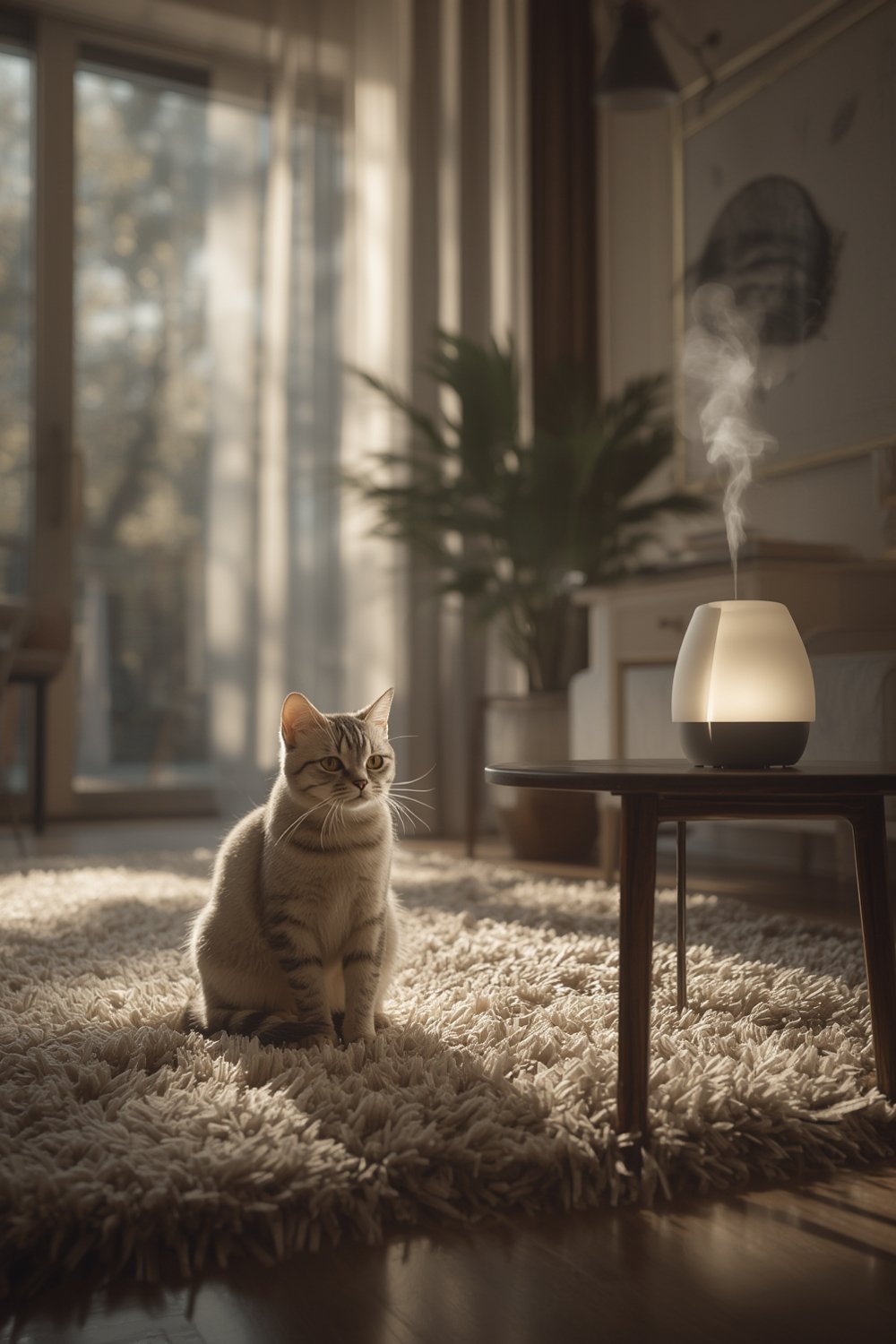
Clinical research over the past year confirms that products like Feliway Classic, Feliway Friends, and newer gel-based alternatives such as Zenifel offer meaningful reductions in stress-related behaviors (scratching, spraying, aggression, excessive hiding). According to a 2023 blinded, placebo-controlled trial, the Feliway Classic diffuser led to a significant reduction in scratching, with some cats achieving a complete stop.
For multi-pet households, certain diffusers target inter-cat and cat-dog tension. Studies suggest these products can ease aggression and territorial disputes. However, responses vary: some cats see notable benefits in just a week, while others show little or no change even after a month. Most peer-reviewed evidence supports pheromone diffusers over essential oil-based “calming” units, which often lack safety or efficacy data for felines.
Want to optimize your cat’s home environment further? See our thorough guides on safer pet-friendly sofa fabric and cat sofa styles that keep stress and messy scratching in check.
How to Use Cat Anxiety Calming Diffusers: A Practical Guide
Choosing and deploying a cat anxiety-calming diffuser is straightforward—but tiny mistakes can sink your results. Here’s a step-by-step checklist for getting the best out of your investment.
- Pick a reputable, pheromone-based diffuser. Prioritize brands with published evidence: Feliway Classic for general anxiety and scratching, Feliway Friends for inter-cat tension, or Zenifel for gel-based, electricity-free options. Steer clear of “calming” oil blends unless specifically formulated and proven safe for cats. See recent clinical trial results here.
- Set up in the right location. Plug in or uncap your diffuser at cat nose height in the chosen room. Avoid putting it behind furniture, by open windows/doors, or close to litter boxes and food bowls.
- Mind the coverage area. One diffuser typically covers about 500–700 square feet (single average room). For large homes or closed-off rooms, use multiple units. Don’t expect whole-house effects with one device.
- Give it time. Most cats show improvement within 7 days, with peak effects after 2–4 weeks of constant use, as found in multiple trials (see details). Monitor weekly but don’t change your setup before 30 days unless your cat’s stress worsens.
- Replenish refills on schedule. Swap out liquid vials or gel packs per the manufacturer’s instructions (usually every 30 days). If your bottle empties faster, check for room drafts or powerful heaters nearby.
- Track and troubleshoot. Note any behavioral changes—positive or negative. If your cat seems worse, or nothing changes after a month, try a different diffuser type or consider other calming interventions. Never combine with essential oil diffusers not labeled for cats.
- Layer environmental enrichment. Combine pheromone diffuser use with strategic enrichment: more hideaways, vertical shelving, puzzle feeders, or water fountains. For grooming relief, see the cat self-grooming brush guide.
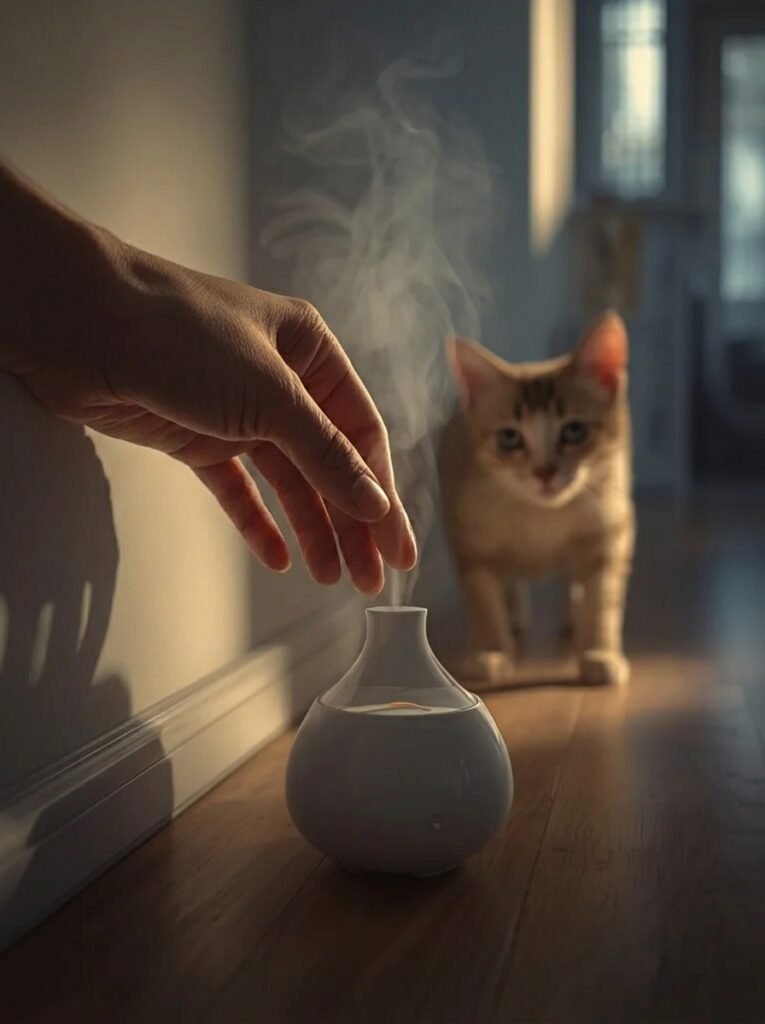
- Consider cost and longevity. Budget for starter kits ($20–30) and ongoing refills ($20–25 monthly), with a realistic annual cost of $260+ for one room. Gel diffusers may last longer per unit but require checking.
- Clean nearby surfaces as needed. Some users report light oily residue after long-term use. Wipe surfaces near the diffuser at refill changes.
For more ideas on pet enrichment and home upgrades that help cats feel secure, browse guides on smart litter boxes, cat water fountains, and hair removers.
Real-World Performance: Advanced Analysis and Pitfalls
While plenty of promising data and positive reviews exist, real-world results with cat anxiety calming diffusers often diverge from marketing claims. Here’s what typically goes wrong—and how the formats compare based on controlled trials and market analytics.
Common Pitfalls
- Non-response. Roughly 15–30% of cats show little or no improvement, even with correct and consistent use. Only around 11% of cat owners in recent trials with Feliway Classic reported complete resolution of a target behavior like scratching. Many cats do show partial improvement.
- Improper placement or coverage. Diffusers placed in airflow, behind furniture, or in too large an area may not reach refill-lifetime claims or result in diluted effect.
- Cost barriers. Ongoing refills, especially for homes needing multiple devices, quickly add up. Many users stop use if effects are faint or unclear.
- Odor, residue, or human reactions. While pheromone products are labeled as odorless, minor oily or chemical smells are reported, as are rare cases of mild residue or headaches in people. These are usually linked to added botanicals or close proximity.
- Expecting instant transformation. While shifts can start quickly, patience (2–4 weeks) is needed for the best effect—especially for chronic or complex anxiety.
- Confusing pheromone vs. herbal or oil blends. Only true pheromone analogues have strong evidence for cats. Avoid “calming oil” and generic herbal products with ambiguous active ingredients, as some essential oils are unsafe for cats (source).
Product Format Comparison and Key Data
| Format | Peer-Reviewed Evidence | Best Use Case | Success Rate | Price Range | Drawbacks |
|---|---|---|---|---|---|
| Electric Diffuser (Feliway, Zenifel) | Numerous controlled trials, moderate effect, safe (PLOS One 2023) | Chronic stress, scratching, aggression, multi-pet | Partial/complete improvement in 70–85% of cases (est.), ~11% complete success* | $20–30 kit, $20–25 monthly refill | Ongoing costs, variable user results, room-limited coverage |
| Spray | Supported for acute stress (travel, vet visits), less for chronic | Short-term calming during events | Partial improvement (varies by study) | ~$15–25 per bottle | Short duration, needs reapplication |
| Collar | Sparse recent data for cats; more for dogs | Portable or multi-pet homes | Unknown; likely moderate | ~$15–25 per 30 days | Fit/tolerance issues, evidence gap |
| Essential Oil/Herbal Diffuser | Not supported in cats, can be risky | Not recommended | No clinical data | $10–20 starter, cheap refills | Safety concern, no proven benefit |
*Complete success = total stop to target behavior; partial responders are more common.
Understanding these nuances can help you avoid disappointment. For best results, pair pheromone diffusers with other practical anxiety-reducing steps like play-based enrichment (see our dog enrichment toys guide for cross-species ideas).
Conclusion
The research is clear: cat anxiety-calming diffuser products like Feliway and Zenifel can bring real relief from stress-related feline behaviors, but the effect is moderate—not every cat or household benefits. Stick to clinically proven formulas, follow setup best practices, and expect partial improvement rather than a miracle.
For more in-depth pet tech advice, explore our reviews of dual cat feeders and smart pet feeders. Ready to try a cat anxiety-calming diffuser? Shop carefully, observe closely, and be prepared for trial and error to find the right fit for your home.
Frequently Asked Questions
Do cat anxiety calming diffusers really work?
Multiple controlled trials and reviews show that branded pheromone diffusers can reduce stress and unwanted behaviors in many—but not all—cats. Effects are moderate, with roughly 70–85% of cats showing some improvement and about 10–12% having complete resolution for specific issues like scratching. Response is individual and not guaranteed.
How long does it take for a cat calming diffuser to start working?
Most cats show changes within the first week, but optimal results can take 2–4 weeks of continuous use. For acute events (like a vet visit), sprays may work faster—sometimes within minutes to hours.
Are there any risks or side effects for cats or humans?
Clinical trials document high safety for cats, even with long-term use. Some people note mild odors or headaches, and rare cats may become more withdrawn. Essential oil-based “calming” diffusers can be unsafe—stick to tested pheromone products.
What’s the real cost of using a cat anxiety calming diffuser?
Expect to spend $20–30 on a starter kit and around $20–25 per monthly refill for each unit. Annual costs for one area can exceed $260, especially if you run multiple units in a large space.
Is it okay to use an essential oil diffuser instead of a pheromone diffuser?
No. Most essential oils are ineffective or potentially toxic to cats. Feline pheromone-based diffusers have robust safety and clinical data; essential oils do not.
—