

LED garage ceiling lights are transforming garages across North America and Europe with brighter light, greater efficiency, and simple installation — but choosing, installing, and getting the most from these lights takes more than picking the first product you see online.
Key Takeaways
- LED garage ceiling lights offer major energy savings and brighter, more reliable illumination for modern garages.
- Most guides ignore smart controls, modular expandability, and compatibility with garage door openers — three crucial upgrade factors.
- Realistic installation and cost considerations can prevent surprises and disappointment down the line.
- What Makes LED Garage Ceiling Lights a Smart Upgrade?
- Step-by-Step: Upgrading Your Garage Lighting
- Analysis & Pitfalls: What Users and Data Reveal
- Conclusion
- FAQ
What Makes LED Garage Ceiling Lights a Smart Upgrade?
Switching to LED garage ceiling lights means more than a simple “plug and play” change. The shift is driven by real-world factors: energy efficiency, cost savings, and regulations on outdated lighting. In 2024, the North American LED lighting market hit $22.2 billion, expected to double by 2033, with residential use making up nearly a fifth of this surge. Europe follows closely, with its own market exceeding $22.85 billion this year, supported by stricter energy regulations and growing homeowner demand for sustainable, reliable lighting. While there is no segmentation for garage-only statistics, these trends show home and garage upgrades are a meaningful share of the market (IMARC Group, Grand View Research).
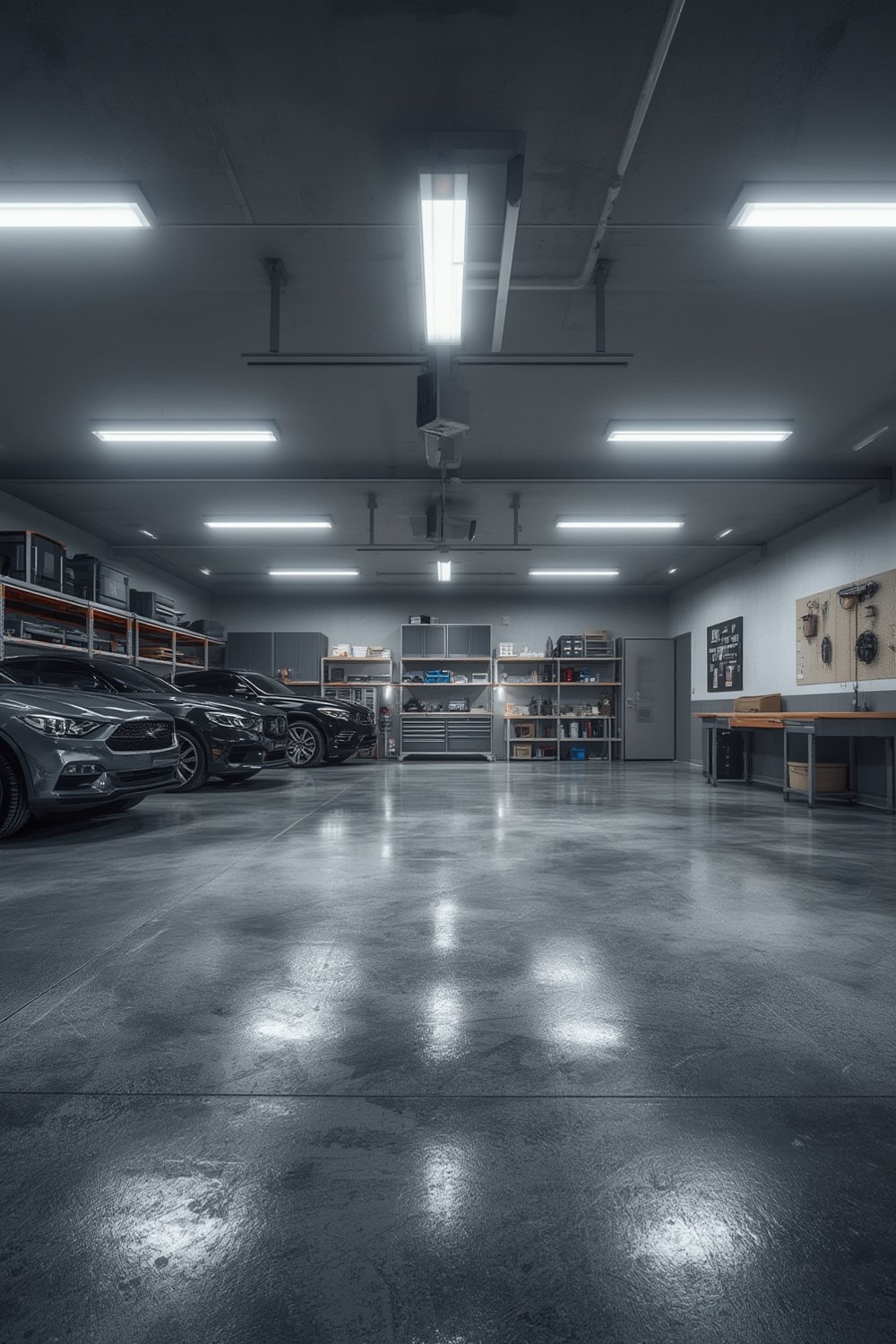
Why should you care? These lights offer up to 70 percent savings versus traditional fluorescents or incandescents, slash maintenance, improve visibility for safety and productivity, and help future-proof your home before regulators completely phase out older bulb types (Straits Research).
Before you upgrade, it pays to understand how installation, brightness, expandability, and evolving safety and warranty standards should guide your choices.
Step-by-Step: Upgrading Your Garage Lighting
Upgrading to LED garage ceiling lights is not as overwhelming as you might think, but the right planning prevents headaches. Here’s how to do it the right way.
Step 1: Evaluate Your Lighting Needs
Assess the square footage and what you use your garage for: basic storage requires less light than a workshop or hobby space. For general two-car garages, aim for at least 8000–10,000 lumens total. Task areas (benches, tool walls) may need focused lights with higher CRI for color accuracy.
Step 2: Select Your Fixtures
Look for LED shop lights or commercial-grade panel fixtures rated at 100–150 lumens per watt, with a CRI of 80 or above for true color rendering. Despite the lack of model-specific data in public sources, typically rated lifespans exceed 50,000 hours for reputable brands. Links like garage storage systems or battery powered lawn mowers show how the right gear can modernize a garage — lighting is no exception.
Step 3: Prepare the Garage
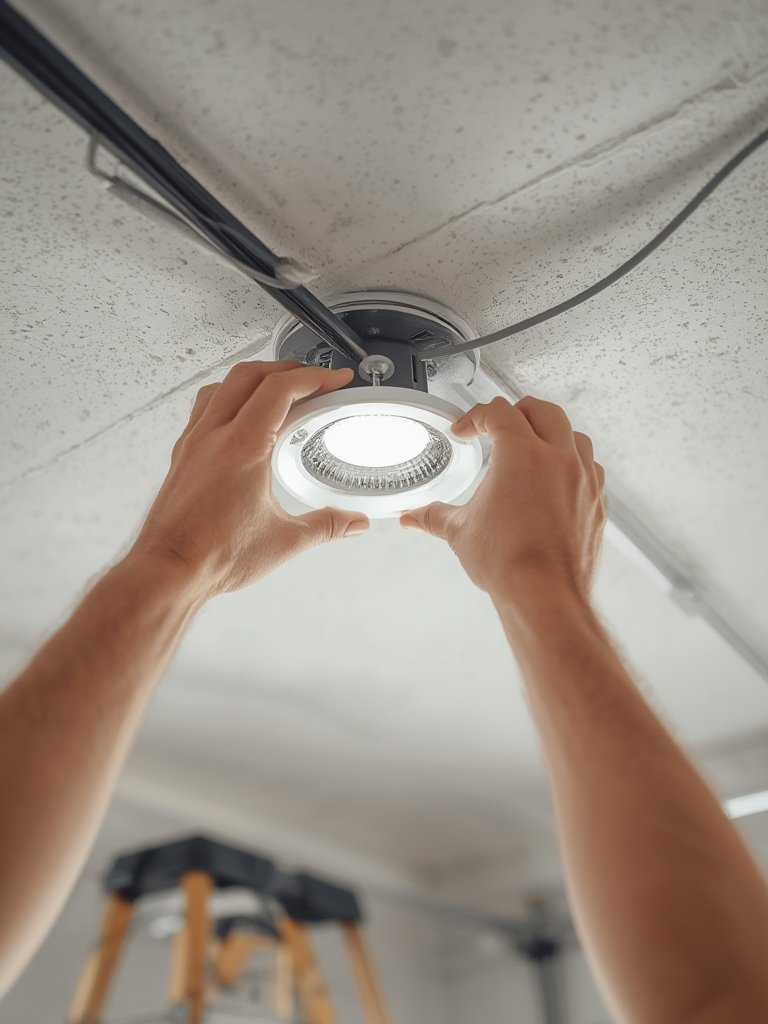
Shut off the relevant circuits at your breaker, clear out installation space, and make sure mounting surfaces are clean and stable. If you have ceiling racks or a wall-mounted garage organization system, verify the lights’ placement won’t block access.
Step 4: Install the Fixtures
Use included mounting kits or robust anchors for drywall or masonry. For plug-and-play models, simply plug into a ceiling outlet and secure with hardware. Hardwired models may require an electrician, especially if you’re not comfortable handling wiring. For most two-car garages, expect installation for 2–3 fixtures to take about 1–2 hours for plug-ins, or 2–3 hours for full hardwire.
Step 5: Test and Adjust
Restore power and check for even brightness, flicker, or dark corners. Adjust angles or add fixtures where needed. If you want to future-proof, consider models compatible with app-based smart controls — a feature overlooked by most guides but worth exploring for automated or hands-free operation.
Step 6: Maintain for Longevity
Dust or wipe fixtures every few months to maintain efficiency. Check warranty terms for periodic inspection requirements to keep your coverage valid. Brands vary on their smart technology adoption, which may extend to lighting controls in the near future.
Analysis & Pitfalls: What Users and Data Reveal
No lighting solution is perfect. Here’s what you might not discover in marketing materials but will matter as a homeowner.
- Pain Points Go Underreported: While published reviews are sparse, common complaints in similar retrofit markets include flickering, lower-than-advertised brightness, confusing installation steps, and premature driver or component failure. Cheap no-brand imports may also lack certifications—which may affect insurance claims after electrical incidents.
- Smart Controls, Expandability, and Compatibility: These factors are rarely discussed by competitors. Smart switch or app integration is ideal for remote activation. Modular expandability lets you add fixtures as needs grow. Compatibility issues with some garage door openers (especially older models with RF remotes) can cause interference—so always check product support documentation before you buy.
- Safety Certifications and Warranty: Not all products are UL/ETL listed—avoid those without third-party marking. Warranty terms vary widely, some as low as 1 year on electronics. No data on best warranties in this category, but always check policy terms and retailer return policy to avoid problems.
- Cost Factors: No official 2024 pricing data, but a realistic upgrade for a two-car garage using mid-tier plug-in LED garage ceiling lights typically ranges $120-$300 (materials) plus $100-$200 for installation if you hire an electrician. Add 15%-25% for hardwired smart features.
| Feature | LED Garage Ceiling Lights | Fluorescent Fixtures | Incandescent Bulbs |
|---|---|---|---|
| Typical Lifespan | 50,000+ hours | 7,000-15,000 hours | 1,500 hours |
| Energy Efficiency (lumens/watt) | 100-150 | 60-90 | 12-18 |
| Annual Cost for 8,000 Lumens | $12-$22 | $24-$45 | $75-$100 |
| Smart/Home Automation Support | Available | Rare | Not supported |
| Brightness Decay/Color Shift | Minimal | Moderate | High |
For more on optimizing your garage space, explore guides on vertical garden systems or smart sprinkler controllers for the rest of your home environment.
Conclusion
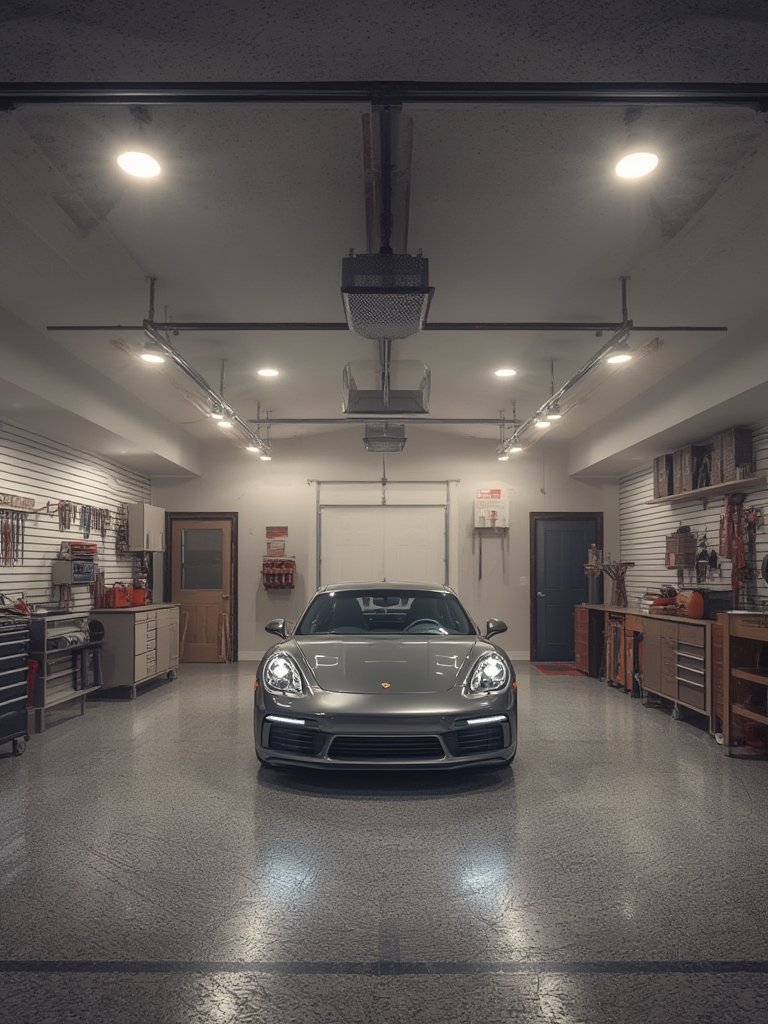
LED garage ceiling lights are a practical upgrade that boosts your space, supports energy goals, and builds in long-term savings — but only when you go beyond basic feature lists and pay attention to certifications, compatibility, and real usage needs. Ready to upgrade? Don’t forget to compare features, estimate your total costs, and consider add-ons like modular expansion or automation for a future-ready garage.
Choose LED garage ceiling lights with your exact setup in mind and get a safer, brighter, and more efficient work and storage space. Want the best garage possible? Start planning your lighting upgrade now.
Frequently Asked Questions
How many LED garage ceiling lights do I need for a standard two-car garage?
Most two-car garages need 2–3 high-output fixtures, totaling 8000–10,000 lumens for even light. Add more for workbench or detail areas.
Are plug-in LED garage ceiling lights safe and easy to install myself?
Plug-in fixtures are typically safe for DIY installation if mounted securely and on their own circuit. For hardwired models or if you’re unsure, contact a licensed electrician.
What’s the average cost to upgrade a garage with LED ceiling lights?
Budget $120–$300 for good quality fixtures and $100–$200 for installation if you hire an electrician. Smart features or extra lights raise the total.
Will LED garage ceiling lights work with my garage door opener?
Most modern LEDs work fine, but certain fixtures can cause interference with older radio-controlled openers. Check product FAQs for compatibility before buying.
What about warranty and safety certifications for LED garage ceiling lights?
Look for UL or ETL listing and at least a 3-year warranty for peace of mind. Read the fine print — some cheaper models skip third-party testing and may not be covered long-term.