

floating wall shelves heavy duty are a modern solution for maximizing storage and maintaining minimalist style, but most shoppers underestimate the real installation challenges and structural risks. Here’s what you actually need to know in 2024 to avoid sagging, failed anchors, or costly mistakes.
Key Takeaways
- For floating wall shelves heavy duty, true weight capacity depends on mounting method—stud mounting is mandatory for 100+ lbs.
- Solid hardwood or reinforced metal shelves plus concealed heavy-duty brackets outperform cheap MDF or drywall-only installs.
- Most failures come from skipped studs, poor hardware, lack of wall compatibility checks, and shelves too long for their supports.
- The Core Concept: What Really Makes Floating Wall Shelves Heavy Duty?
- Step-by-Step Guide: Installing Floating Wall Shelves Heavy Duty
- Advanced Analysis & Common Pitfalls
- Conclusion
- FAQ
The Core Concept: What Really Makes Floating Wall Shelves Heavy Duty?
Floating wall shelves heavy duty aren’t just “stylish boards on the wall.” True heavy-duty floating shelves are engineered to hold serious weight—typically 50-100 lbs (23-45 kg) per shelf when you hit at least two studs, and up to 300-400 lbs (136-181 kg) for premium stainless steel or reinforced hardwood models mounted across three studs. These figures are not arbitrary—they reflect real structural math, as explained by experts and actual product tests (see source).
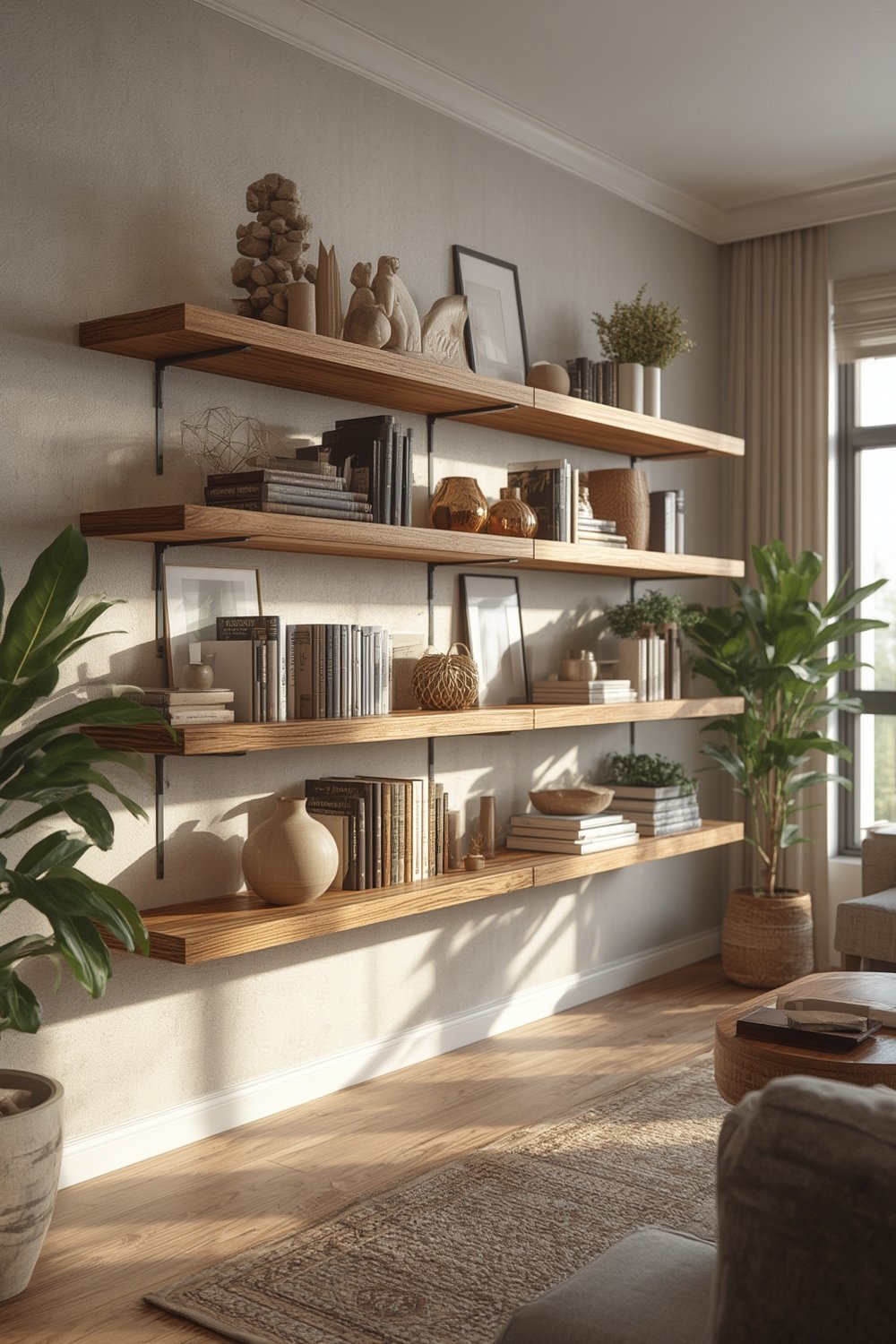
Traditional wall shelving, with visible brackets, can also hit 50-100 lbs but usually sags less, since the external brackets take most of the load. Floating shelves prioritize visual appeal—the signature look is bracketless and clean—but this means smart engineering and correct mounting are essential if you need them to be truly heavy duty (see source).
The real key? The wall structure and mounting system matter even more than the shelf itself. For serious strength, Solid hardwood or stainless steel paired with high-quality, concealed bracket systems are the modern standard (see source).
Curious about other home storage, organization, or DIY upgrades? Explore smart garage storage systems, like wall-mounted garage shelves, or improve your living room with a lift top coffee table for hidden storage.
Step-by-Step Guide: Installing Floating Wall Shelves Heavy Duty
Installing a heavy-duty floating shelf is not a quick “screw into drywall” job. To reliably hold over 50 lbs, you must combine proper materials, anchors, and precise alignment.
Step 1: Choose the Right Shelf Material
Solid hardwood or thick stainless steel shelves deliver the best balance of aesthetics and high load capacity. Cheap MDF or thin ply will flex under medium weight, leading to sag—even if mounted well. Kitchen, garage, or office settings with frequent heavy use demand premium material.
Step 2: Select Concealed Bracket or Rod System
Skip the “floating shelf kits” for anything marketed under 40 lbs. Instead, look for modern concealed metal rod systems (such as Hovr or custom welded rods) which can support up to 150 lbs per stud. Internal steel supports inside the shelf itself will further prevent bowing.
Step 3: Map Out and Mark Your Stud Locations
Use a reliable stud finder to map out the section of wall, targeting at least two (ideally three) studs for maximum shelf length and load. Mark all pilot holes precisely—no guessing or “close enough.” Try to avoid shelf placement dictated only by visual preference if it misses studs.
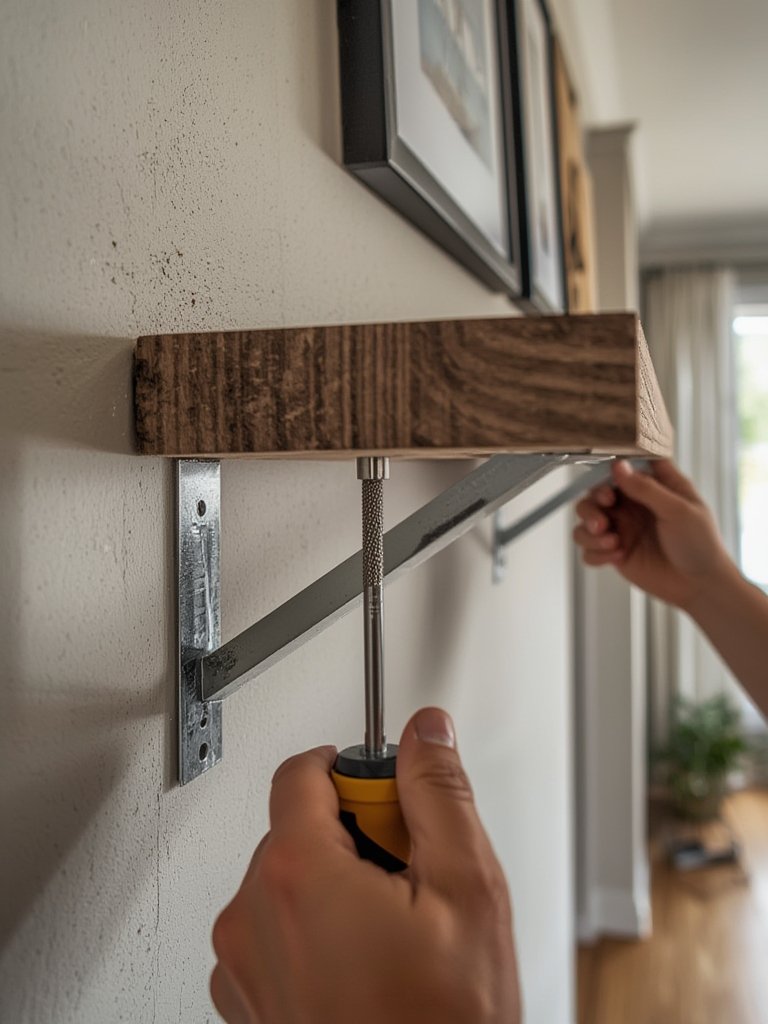
Step 4: Drill Deep Pilot Holes and Mount Brackets
Drill into the exact center of each stud, using a drill bit sized for your lag bolts or bracket hardware. For masonry or brick, use appropriate anchors and a hammer drill. Tighten hardware with a socket wrench—hand screwing is not sufficient for heavy loads.
Step 5: Attach Shelf, Double-Check Level and Hardware
Slide your shelf onto the installed rods/brackets. Use a level tool for accuracy. Secure locking screws if your system offers them. Carefully pressure-test the shelf by pushing down slightly at intervals; feel for any movement or creaks before loading up.
Step 6: Final Load Testing & Troubleshooting
Start with lighter items, watching for movement, then add heavier objects gradually. If you notice shelf tilting or wall flexing, remove weight immediately and re-inspect your installation. You may need to add an extra support or redistribute the load for safety.
Incorporating smart space-saving furniture, like a platform bed with storage drawers or even modular sectional sofas, can help declutter while keeping your shelves clear for display essentials.
Advanced Analysis & Common Pitfalls
Even if the box says “holds up to 300 lbs,” most floating shelf failures stem from mismatched expectations and overlooked install details. Here are the top real-world pitfalls.
1. Overestimated Weight Ratings
Manufacturers often cite the theoretical max weight for “ideal” mountings—usually assuming 3 studs, premium lag bolts, and perfect wall condition. In practice, most average homes will never recreate these lab results. Safe rule of thumb: plan for half the advertised max unless you’re certain you’ve hit every structural detail.
| Mounting Surface | Bracket Type | Realistic Max (per shelf) | Risks |
|---|---|---|---|
| Studs (2-3 studs, wood) | Heavy-duty concealed rods | 100-300 lbs | Must pre-drill and anchor in exact stud center |
| Drywall only | Drywall anchors | 10-40 lbs | Shelf sag, anchor pullout, sudden failure |
| Masonry/Brick | Expansion or wedge anchors | 100-400 lbs | Wrong anchor = crumbling, loose shelf |
| Studs + Drywall | Lag bolts to studs | Same as stud-only, but higher safety margin | Never trust toggle bolts for high loads |
2. Most Reported User Complaints
- Sagging after a few months (especially for shelves not anchored at both ends or longer than 48″).
- Hardware that loosens over time or never truly locks the shelf in place.
- Poor wall compatibility—anchors pulling out of drywall, especially in older homes or those with hidden electrical/plumbing behind the wall.
3. Material-Specific Weaknesses
- MDF or veneered shelves fail early, regardless of anchor system.
- Stainless steel shelves can support more, but require proper internal reinforcement for full strength (see source).
- Solid hardwood offers solid strength and style, but cost is higher than standard floating shelf kits.
4. Safety Certifications and Standards
There are no industry-wide ASTM or ISO safety standards for floating wall shelves heavy duty, so rely on detailed manufacturer specs, clear “per-stud” disclosures, and real user reviews (see source). Lifetime or multi-year warranties are a proxy for product confidence.
5. Cost Realities
Heavy-duty shelves with proper hardwood or stainless steel and premium brackets cost noticeably more than standard MDF “floating shelves.” There is little true 2024 cost comparison available online, but expect to pay a premium both for materials and, if you hire a pro, installation time. For lighter shelves, find affordable options at big-box stores, but know you’re trading max load for price.
If you’re also looking for renter-friendly or reconfigurable wall décor, consider DIY wall panels or check out budget standing desks for more affordable home updates.

Conclusion
In summary, heavy duty floating wall shelves aren’t just about thick wood and sleek hardware—they require a deeper understanding of your wall type, realistic weight math, and the willingness to pay for robust materials and careful install. Always check stud alignment, invest in the best possible mounting system, and remember that every shortcut increases your risk of shelf failure. Get this right, and your floating wall shelves heavy duty install will hold up for years—keeping your home organized, stylish, and safe.
Ready to upgrade your storage? Research your wall structure, choose materials wisely, and double-check every anchor—or shop professional-grade options backed by real warranties for peace of mind.
FAQ
How much weight can heavy duty floating wall shelves really hold?
When mounted properly into 2-3 wall studs using high-quality concealed brackets, a heavy duty floating shelf can usually hold 100-300 lbs. Drywall-only installations are limited to 10-40 lbs at best and risk sudden failure.
Do I need to find studs for every floating wall shelf?
Yes, for anything rated above 40 lbs, stud mounting is essential. Floating shelf anchors into drywall alone will not support heavy loads and can cause shelf collapse over time.
What’s the best material for a heavy duty floating shelf?
Solid hardwood or thick stainless steel offer the best weight support and durability. Avoid thin plywood or MDF, especially in kitchens or for shelves over 36″ in length.
Why do floating wall shelves sag, even with good hardware?
Sagging is most common when shelves are too long (>48″) without a center support, material is too thin, or your bracket isn’t anchored deeply into at least 2 studs. Internal reinforcements, shelf thickness, and stud placement all matter.
Is there a safety certification for floating wall shelves heavy duty?
There are no industry-standard certifications (like ASTM or ISO). Rely on detailed engineering specs from reputable brands, look for clear “per-stud” load ratings, and read user reviews for real-world performance insights.