

Smart Air Purifier Large Room: 7 Best Ways To Improve Air Quality (Proven Guide)
A smart air purifier large room model is quickly becoming essential for households that want measurable air quality improvements across open spaces. Choosing the right smart air purifier large room solution involves more than reviewing specifications—it requires understanding real performance factors such as airflow strength, filtration quality, and sensor reliability.
Key Takeaways
- Top smart air purifiers for large rooms in 2024 deliver rapid particulate reduction and wide coverage, but sensor and app data can be inconsistent.
- Maintenance costs and app security are often overlooked by buyers despite being critical to long-term satisfaction.
- Not all “smart” features deliver practical benefits in daily use — prioritize reliable filtration, verified coverage, and transparency on privacy.
- What Sets a Smart Air Purifier for Large Rooms Apart?
- How to Choose and Set Up a Smart Air Purifier for a Large Room
- Advanced Analysis and Common Pitfalls with Smart Air Purifiers
- Conclusion
- Frequently Asked Questions
What Sets a Smart Air Purifier for Large Rooms Apart?
A smart air purifier large room device is specifically engineered to filter air efficiently across wide areas using powerful fans, multi-stage filtration, and intelligent air quality monitoring.
Unlike smaller units, a smart air purifier large room system must maintain consistent air circulation across hundreds of square feet while adjusting performance automatically as conditions change.
These advanced purifiers typically include WiFi connectivity, app integration, and real-time environmental sensors. For open layouts, shared spaces, or large living rooms, choosing a smart air purifier large room unit ensures faster air cleaning and more consistent filtration.
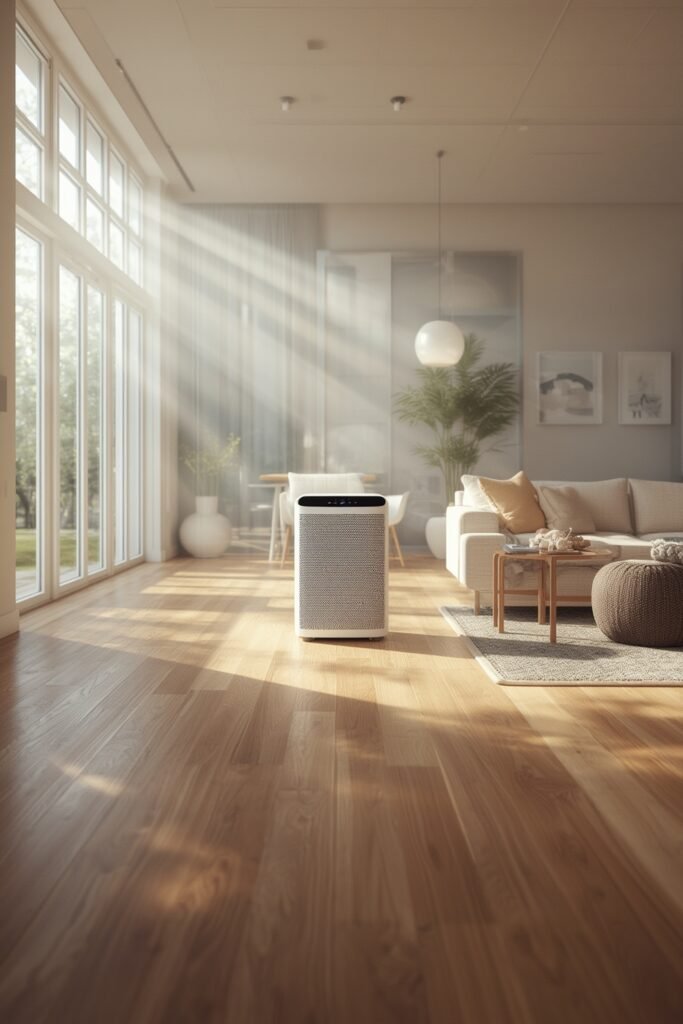
What separates large room smart models from standard options?
- Higher Clean Air Delivery Rate (CADR): Models like the Levoit Core 600S (up to 437 CFM for pollen) and IQAir HealthPro Plus (CADR 336–356) can change the air in rooms exceeding 500 sq ft nearly five times each hour [Source].
- Advanced Multi-stage Filtration: Medical-grade HEPA, carbon, and washable filter stages remove particles as tiny as 0.003 microns, along with gases and odors [Source].
- Integrated SMART Features: WiFi connectivity, app controls, and built-in sensors allow the purifier to adjust speed or activate automatically as air quality changes.
For pet homes, high-traffic rooms, or allergy sufferers, the right smart purifier can mean fewer symptoms, less dust buildup, and fresher air. But choosing the wrong one often leads to wasted money and minimal real-world benefit. For pet wellness enthusiasts, pairing a purifier with a reusable lint roller can further reduce allergens.
How to Choose and Set Up a Smart Air Purifier for a Large Room
Selecting the best smart air purifier large room model requires evaluating room size, filtration needs, and smart functionality.
- Measure your space accurately. Calculate square footage, and consider ceiling height for true air volume. If you have an open-concept area, measure the full open space, not just part of it.
- Identify the most common pollutants. Do you have pets, live near highways, or have allergy concerns? HEPA H13 or better is non-negotiable. For smoke, invest in medical-grade carbon filtration.
- Prioritize high CADR and certified HEPA. Choose units like the IQAir HealthPro Plus or Levoit Core 600S, which clearly list CADR by particle type. Beware of vague marketing terms—demand actual performance numbers [Source].
- Check app usability and compatibility. Download the app before buying if possible, or preview walkthroughs online. Look for user-friendly controls and clear privacy statements. If tech issues arise, something like a smart indoor thermometer can double-check actual air readings.
- Place your purifier for optimal airflow. Avoid shoving it behind sofas or under desks. Center of the room, away from walls and obstacles, works best for circulation. In very large spaces, two smaller purifiers can outperform a single oversized one.
- Set up scheduling and auto modes in the app. Use “auto” if sensor data is reliable, but manually schedule high output during home or pet activity peaks for best results. For overnight use, check noise specs or try units with a tested quiet mode (below 35–40 dB as with Smart Air Blast Mini).
- Monitor maintenance alerts and filter status. Replace, wash, or vacuum filters as directed. Consider purifiers with primarily washable filters, like the NuWave OxyPure, to reduce recurring expenses [Source]. Pair this setup with a cat water fountain for improved overall pet air and water quality.
- Test sensor accuracy periodically. Use a cheap PM2.5 monitor or your smart hygrometer to cross-check the app’s readings, especially during wildfires or allergy season.
If you want a smart air purifier that truly “just works,” prioritize brands with frequent firmware updates and responsive customer support. Maintenance tracking, remote controls, and real-time room air stats are nice, but not at the expense of reliable filtration and transparent app privacy.
Remember, true automation should save time. With a well-positioned purifier and a few other smart upgrades (like a smart litter box if you’re a cat owner), you can keep air fresh with less hassle and fewer allergy triggers.
Advanced Analysis and Common Pitfalls with Smart Air Purifiers
Even highly rated smart air purifier large room models may show performance limitations depending on placement, maintenance, or connectivity reliability.
Common issues identified in recent testing include:
| Brand/Model | CADR (CFM) | HEPA Level | Noise Levels (dBA) | Room Size Recommendation |
|---|---|---|---|---|
| Austin Air HealthMate Plus [Source] | 246 (general) | Medical Grade (99% at 0.1 microns) | Not specified | Up to 361 sq ft |
| IQAir HealthPro Plus [Source] | Dust: 339, Smoke: 336, Pollen: 356 | HyperHEPA (99.5% at 0.003 microns) | Not in tests | 521 sq ft (4.8 ACH) |
| Smart Air Blast Mini [Source] | 287 (PM2.5) | H13 TrueHEPA (99.97%) | 35–56.7 (speed-dependent) | 373 sq ft (5 ACH) |
| Levoit Core 600S | Smoke: 377, Dust: 373, Pollen: 437 | Mechanical (true HEPA status not specified) | Not specified | 584 sq ft (4.8 ACH) |
| Coway Airmega ProX [Source] | High (not numerically stated) | Certified HEPA | Noisy at high speed | Large rooms (not quantified) |
| Blueair Blue Pure 211+ | High (all categories) | HEPA (99.97% at 0.3 microns) | Low: quiet, high: noisy | Large rooms |
| NuWave OxyPure [Source] | Very high | Multi-stage (mostly washable) | Not specified | Large rooms |
- Sensor and App Reliability: Most brands offer particle or VOC sensors for auto fan control, but reviews in 2024 found no data on accuracy in real-world, dusty, or high humidity situations. Overly sensitive sensors can result in constant fan cycling—or missed pollution spikes.
- WiFi/App Security and Privacy: Security details are glaringly absent. None of the leading brands publicly discuss privacy policies for app features or reveal histories of vulnerabilities. You must weigh the convenience of app control against unknown privacy risks.
- Hidden Maintenance Costs: Filter life and price are rarely detailed upfront. For example, while the NuWave OxyPure touts washable filters, other models often require $99+ yearly in replacements. Always factor ongoing costs—not just purchase price—into your decision.
- Noise at High Power: Models like Coway Airmega ProX and Blueair 211+ get noisy at high speeds, sometimes exceeding 55 dB, making overnight or 24/7 use annoying in shared spaces.
- Oversized or Misplaced Purifiers: Bigger isn’t always better. Too large a purifier in a small room wastes energy, while too weak a unit in a proper large room leaves air partially filtered.
- App Connectivity Issues: While not broadly reported in major 2024 reviews, app and WiFi malfunctions are common enough to warrant caution—especially in homes with spotty WiFi.
- Ignored Power Consumption: High-end models may draw 60W or more at top speed. Over time, this can become a nontrivial utility expense if run constantly, especially if you are also operating devices such as a soundproof wall panel system.
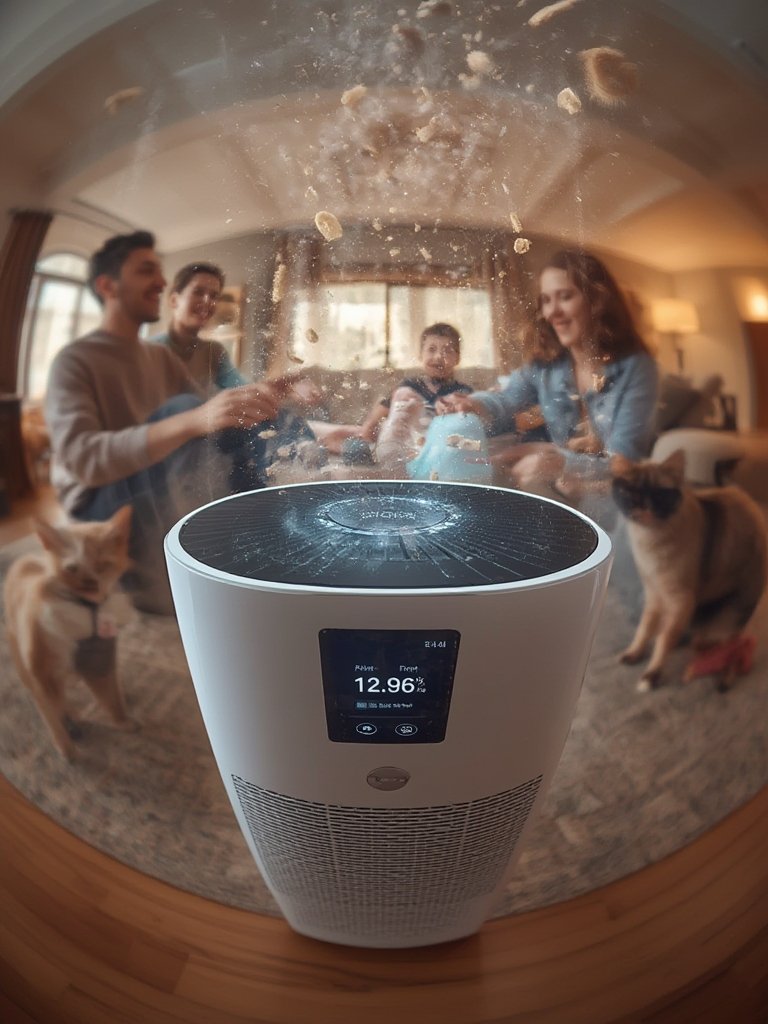
If you need specific app features, try to demo them before purchase. And remember: for homes with pets, a good dog enrichment toy may do as much to reduce airborne allergens as a high-end purifier. Cross-reference app sensor data using an independent air quality meter every few months to spot sensor drift—or just unplug “smart” features entirely if reliability declines.
Conclusion
A smart air purifier large room solution can significantly improve indoor air conditions when filtration performance, airflow strength, and maintenance costs are considered together.
Prioritizing verified performance metrics ensures your smart air purifier large room investment delivers measurable air quality improvements rather than relying only on marketing features.
Before purchasing, compare CADR ratings, filter replacement costs, and app reliability to find the best long-term value.
Ready to improve your environment? Choose a smart air purifier large room model designed for your space and maintain it regularly for the best results.
Frequently Asked Questions
How big a room can a smart air purifier handle?
Top models like the Levoit Core 600S are rated for up to 584 sq ft, while IQAir HealthPro Plus reliably handles around 520 sq ft with high air changes per hour. Always check the CADR and match it to your space size.
Are smart air purifiers safe to leave running 24/7 in a large room?
Yes, but noise and electricity use can be drawbacks. Look for models with tested quiet modes (below 40 dB) and energy-saving auto functions to minimize utility costs and nighttime disruptions.
How often will I need to replace or wash filters?
It varies widely: washable pre-filters can go months between cleanings, but HEPA and carbon filters typically last 6–18 months with typical use. Always refer to manufacturer guidelines and factor annual filter costs into your purchase.
Are the air quality sensors and app data actually reliable?
Not always. 2024 research found no public accuracy benchmarks. For best results, manually cross-check air data with a third-party monitor, especially if you have allergies or are in a high-pollution area.
Is there any privacy risk using app-connected air purifiers?
Potentially. Most manufacturers don’t publish details on their data privacy or app security, so be cautious with WiFi/app-connected devices, especially if you’re privacy conscious. Opt for brands transparent about their privacy policies when possible.