

Automatic cat feeder dual systems are changing how multi-cat households manage feeding routines, making daily schedules easier and helping avoid hunger or squabbles when you are away.
Key Takeaways
- Automatic cat feeder dual systems with larger 3L–5L hoppers are best for multi-cat homes due to fewer refills and consistent meal schedules.
- The smart pet feeder market for cats is expanding rapidly, reaching up to $2.31 billion in 2024 with continued double-digit growth projected.
- Success relies on smart setup, portion testing, honest evaluation of your cats’ feeding habits, and regular maintenance to avoid technical issues.
- What Is an Automatic Cat Feeder Dual System?
- How to Set Up Your Dual Automatic Cat Feeder
- Advanced Analysis & Common Pitfalls
- Conclusion
- Frequently Asked Questions
What Is an Automatic Cat Feeder Dual System?
An automatic cat feeder dual is a programmable feeding device designed for homes with two cats. It dispenses pre-measured food portions on a set schedule, reducing the risk of overeating or sibling rivalry over shared food bowls. Most dual units feature two feeding trays or bowls, often paired with timer controls or smart app connectivity.
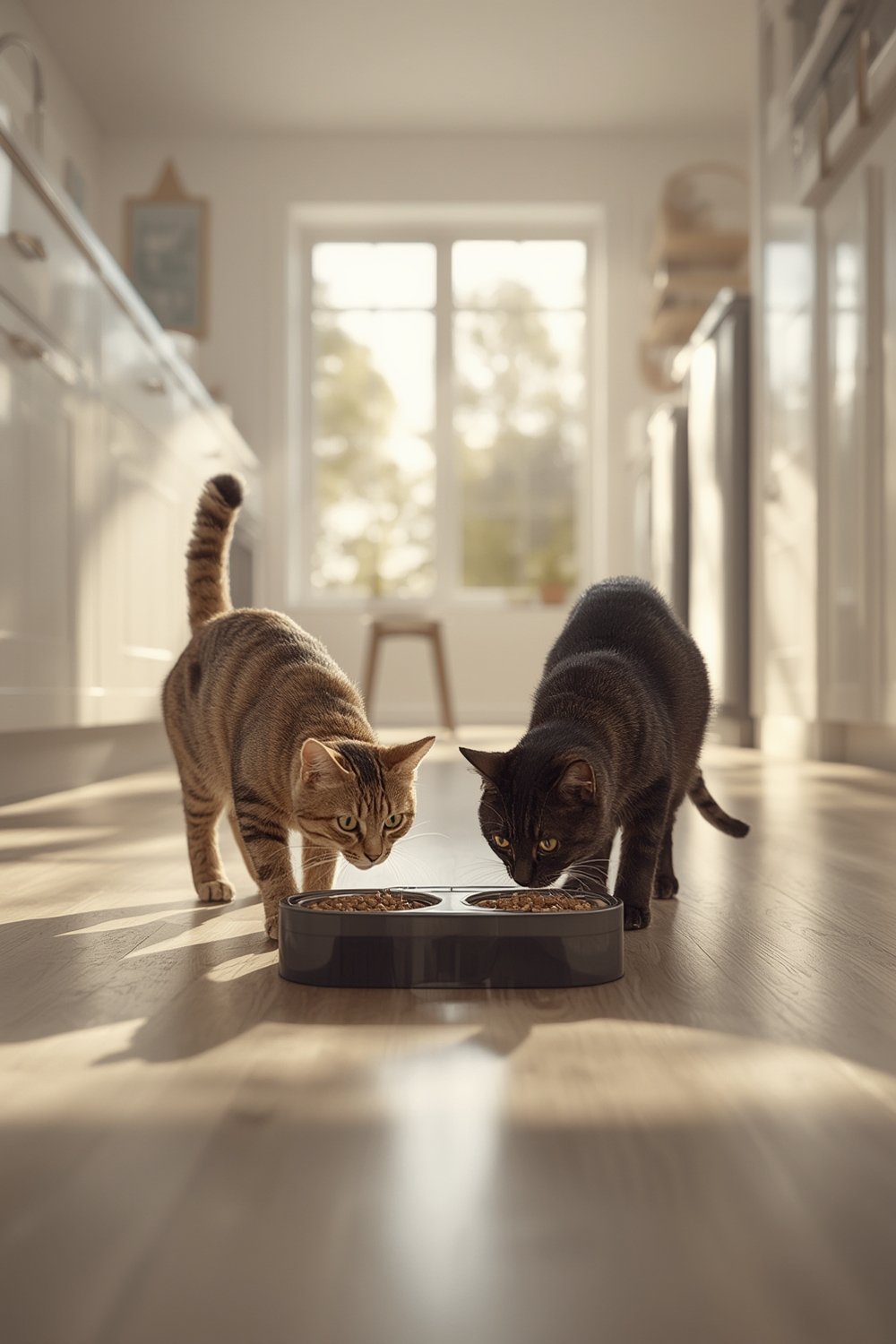
Market data shows that large-capacity (3L–5L) smart pet feeders dominate the segment because they are ideal for households with multiple pets, minimizing how often owners need to refill the hopper. In fact, the global smart pet feeder market was valued between $1.4 and $2.31 billion in 2024—with cat feeders growing faster than dog feeders at a 9.2% annual clip. Projections show double-digit CAGR, reaching an estimated $2.35–$5.71 billion by 2030 to 2035.
(Source: Grand View Research, Zooinform)
Compared to manual feeding, these systems reduce stress on both owners and pets. They enable precision in food delivery and, in some models, allow remote adjustments or monitoring through mobile apps. If you’re also considering grooming automation, see our cat self grooming brush guide for streamlined daily pet care.
How to Set Up Your Dual Automatic Cat Feeder
Setting up a dual automatic cat feeder is straightforward, but getting consistent results and happy cats takes a handful of critical steps. Here’s how to do it well, whether you use a standard timer unit or a smart WiFi-enabled feeder.
- Choose the ideal location. Select a quiet, low-traffic spot with a flat, stable surface. Avoid areas with high humidity or near litter boxes.
- Assemble and clean the unit. Wash the bowls and hopper before the first use. Remove internal stickers or packing foam from moving parts.
- Program the schedule. Use the control panel or app to set at least two feeding times (e.g., morning and evening). For smart feeders, connect to WiFi and check firmware updates.
- Test portions and splitting. Dispense a feeding and observe bowl distribution. For maximum accuracy, use a digital scale to weigh output in each bowl.
- Introduce your cats. Show both cats how the feeder works. Supervise their first meals to ensure both access their allotted portions without bullying.
- Monitor for a week. Observe feeder performance and your cats’ behavior. Watch for clogging, over/under-dispensing, and any dominance issues.
- Refill when needed. With 3L–5L feeders, expect refills every 5–10 days for two cats. Record refill frequency to spot changes in appetite or portion issues. If you need to further automate pet care, see our automatic litter box guide to streamline cleanup too.
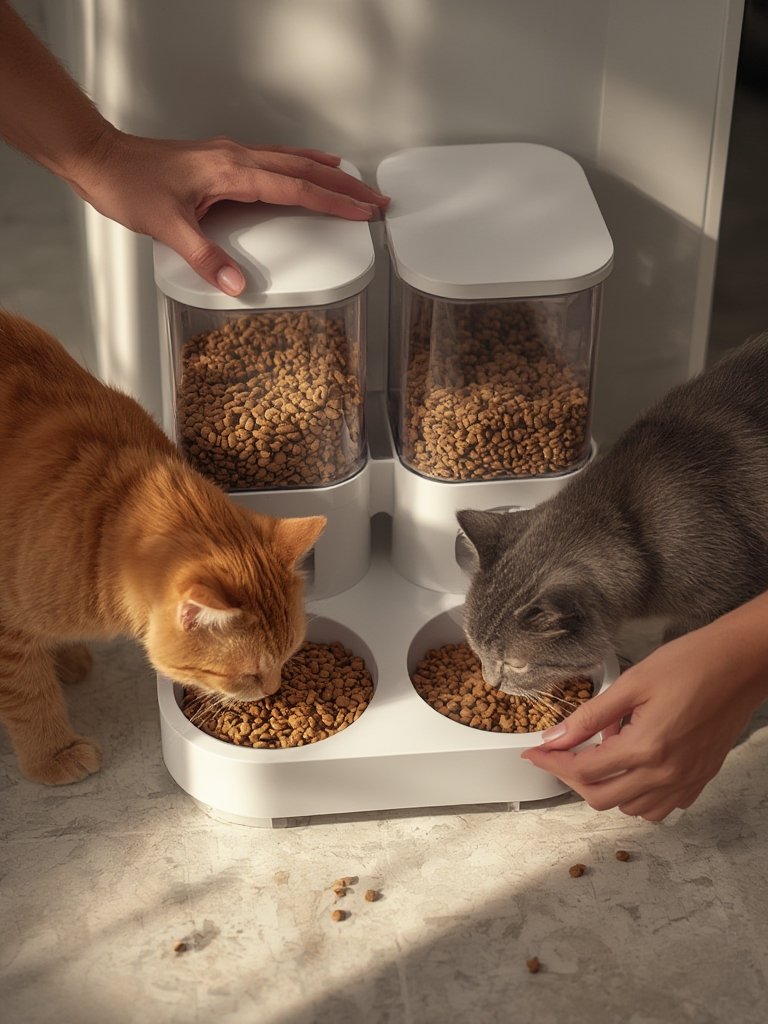
Many smart feeders now include mobile app scheduling or alerts for low food, power outages, or jam detection. For multi-cat homes investing in other smart pet solutions (such as a smart pet feeder with custom scheduling or a pet water fountain for always-filtered drinking water), automated feeding is a logical next step.
Advanced Analysis & Common Pitfalls
While automatic cat feeder dual units are a time-saver, users should be aware of their realistic limitations. Consumer reports and research indicate the following key pain points, even though formal complaint data is limited:
- Uneven food distribution – Many dual feeders struggle with consistent portioning, leading to one cat getting more than the other.
- Feeder jamming – Kibble shapes or moist food can clog dispensers, preventing scheduled feeding and sometimes going unnoticed for hours.
- Small hopper capacity – Models under 3L are frequently refilled, nullifying the automation advantage.
- Power interruptions – Feeder resets may erase feeding programs in the event of a power outage unless a battery backup is present. Not all feeders retain schedules without power.
- Maintenance fatigue – Cleaning moving parts, motor mechanisms, and the hopper is required at least weekly, especially with multiple pets.
| Feature | Low-end Models | Mid-range Models | Premium Models |
|---|---|---|---|
| Hopper Capacity | <2L | 3L–4L | 5L+ |
| Portion Accuracy | Variable | Consistent with kibble only | High with app calibration |
| Power Options | Plug-in | Plug-in + battery back-up | Plug-in, USB, battery, solar (some) |
| App Controls | None/Basic | Basic timer, push notifications | video monitoring |
| Cleaning Ease | Difficult | Removable bowls | Dishwasher safe, modular design |
Few dual feeders on the market can handle wet food or irregular kibble shapes reliably. Maintenance fatigue is real, so plan to incorporate weekly cleanings into your pet care routine—as you would when managing a pet odor eliminator spray for shared spaces.
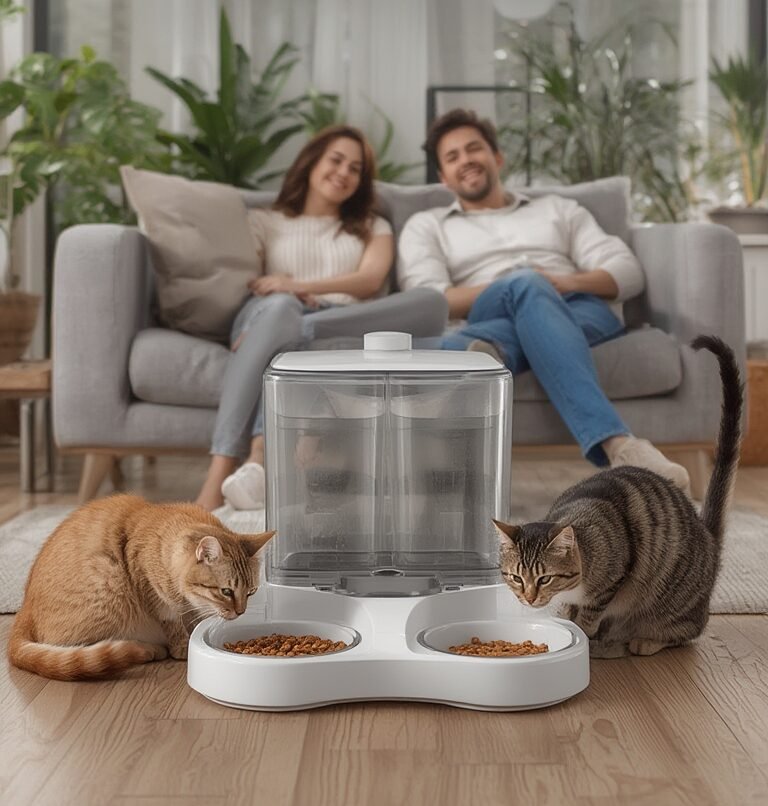
Tech limitations and maintenance needs are the main downsides. Smart feeder units help but are not a replacement for observation—owners should regularly check that both cats are eating as intended and make adjustments if problems arise. For broader comparisons of smart home pet automation, Grand View Research offers a global market overview.
Conclusion
For busy owners, an automatic cat feeder dual offers freedom and consistent mealtimes—but maintenance and smart setup are key. Market data highlights large-capacity, smart-enabled models as the best fit for multi-cat homes. Ultimately, the success of an automatic cat feeder dual depends on choosing the right unit and fine-tuning it to your cats’ needs. Ready to save time and reduce food squabbles? Evaluate your setup and try a smart feeder today for hands-off peace of mind.
Frequently Asked Questions
Can one feeder really serve two cats equally?
Yes, most dual feeders are designed with two separate bowls and adjustable splitters. Consistency depends on model quality—monitor the first few feedings and use a kitchen scale to verify equal portions.
What happens during a power outage?
Many feeders lose program settings if power is interrupted and no battery back-up is present. Invest in models with automatic memory or battery features for uninterrupted service.
How often should I clean the feeder?
Weekly cleaning is recommended to prevent food buildup, motor jams, and bacteria—especially in homes with more than one pet. If your feeder handles wet food, clean after each use.
Can I use any kibble type in a dual automatic feeder?
Stick to standard dry kibble in uniform sizes. Large or irregular kibble and semi-moist foods can jam dispensers. Always test with your specific food before leaving pets unattended.
Are smart app-controlled feeders worth it?
For owners who travel or have unpredictable schedules, app features offer remote scheduling, alerts, and feeding logs—very useful for monitoring and managing two cats’ diets.